The Solution, Part One: Building the Foundation
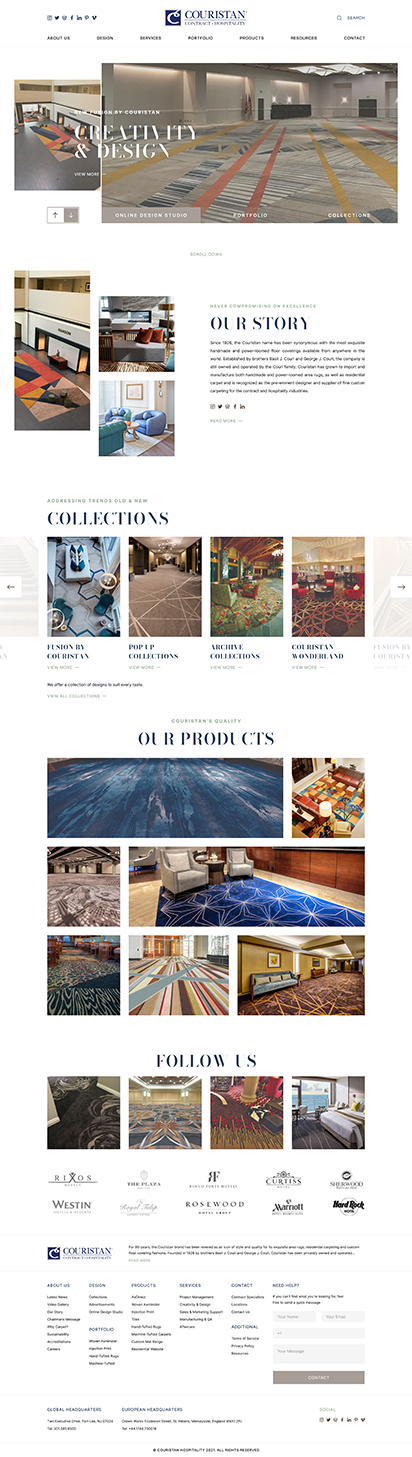
MAXBURST took the external SQL server out of the user’s request path. The site was migrated onto a single content management platform powered by WordPress, running on a LAMP stack, with the product catalog living in a database the website actually owns.
That one architectural decision changed the economics of everything downstream. A search stopped being a round trip to a third-party host and became a local, indexed query. The bottleneck was removed rather than tuned around.
Alongside the migration we delivered a custom-coded responsive build, a purpose-built administration system for content and news, comprehensive accessibility compliance covering ADA, Section 508 and WCAG 2.1 AA, and a full security posture including a web application firewall, malware scanning, real-time threat defense and brute-force protection. SEO continuity was preserved through structured 301 redirect mapping.
None of that is the interesting part. The interesting part is what owning the data layer made possible next.
The Solution, Part Two: A Catalog That Works Like the Business
With product data finally in a structure Couristan controlled, we could model the catalog the way the business actually thinks about it rather than the way retail software assumes.
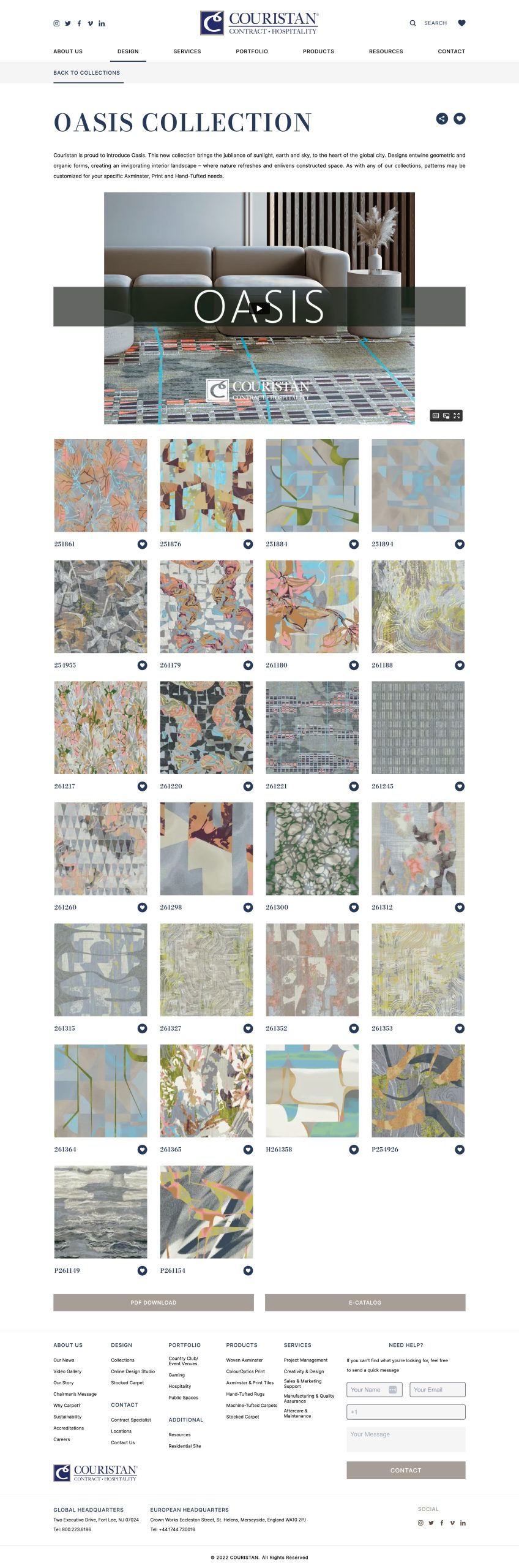
The catalog runs on WooCommerce in catalog mode. No checkout, no payment gateway, no PCI scope. WooCommerce is used here as what it is underneath the store: a mature product data framework with unlimited attributes, flexible taxonomies, media and document relationships, and a query layer that plugs into everything else on the site. Collections, constructions, fibers, colorways, and applications become structured, filterable data instead of images with captions.
There is an Add to Cart control on the site. It does not take payment and it never will.
It is a quote basket, built natively in WooCommerce. A designer or dealer assembles a multi-line selection across collections, and on submit the request pushes directly into Couristan’s Salesforce instance, where it is automatically assigned to the appropriate salesperson and triggers alerts to the team. The sales conversation begins with the full product context already attached, instead of starting from “what were you looking at?”
Architecturally, this is a specification workflow wearing transaction clothing. Cart UI is the correct interface pattern because buyers already understand it, and the native WooCommerce cart object is the right thing to build on. But everything downstream of the submit is CRM integration, not commerce.